
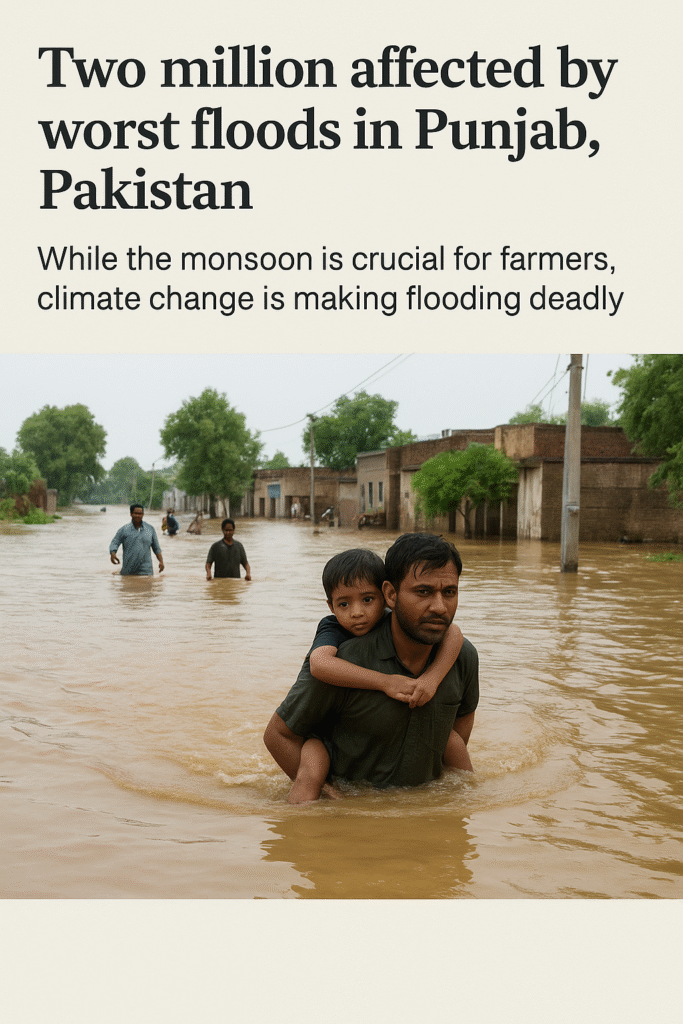
The devastating floods in Punjab, Pakistan, have left nearly two million people struggling for survival, marking one of the worst natural disasters in the province’s history. Entire villages have been submerged, families displaced, and agricultural lands—the backbone of Punjab’s economy—destroyed. This tragedy highlights not just the immediate humanitarian crisis but also the growing vulnerability of our communities to extreme climate events. The floods have overwhelmed local infrastructure, disrupted transportation networks, and forced thousands into makeshift shelters with limited access to clean water, food, and medical aid.
Experts warn that climate change is intensifying the impact of monsoon rains across South Asia. In Pakistan, where millions depend on seasonal rainfall for crops like rice, wheat, and sugarcane, the same rains have now become destructive. The Punjab floods are not just an environmental challenge but also a national crisis that demands urgent action in disaster management, climate resilience, and sustainable urban planning.
Pakistan needs stronger early-warning systems, better river management, and international cooperation to address climate-driven disasters. The Punjab floods have shown how vulnerable low-lying regions are, and how millions of Pakistanis are directly at risk from the changing climate. These catastrophic floods should be a wake-up call for policymakers, NGOs, and the public to prioritize climate adaptation and mitigation strategies before more lives and livelihoods are lost.
