
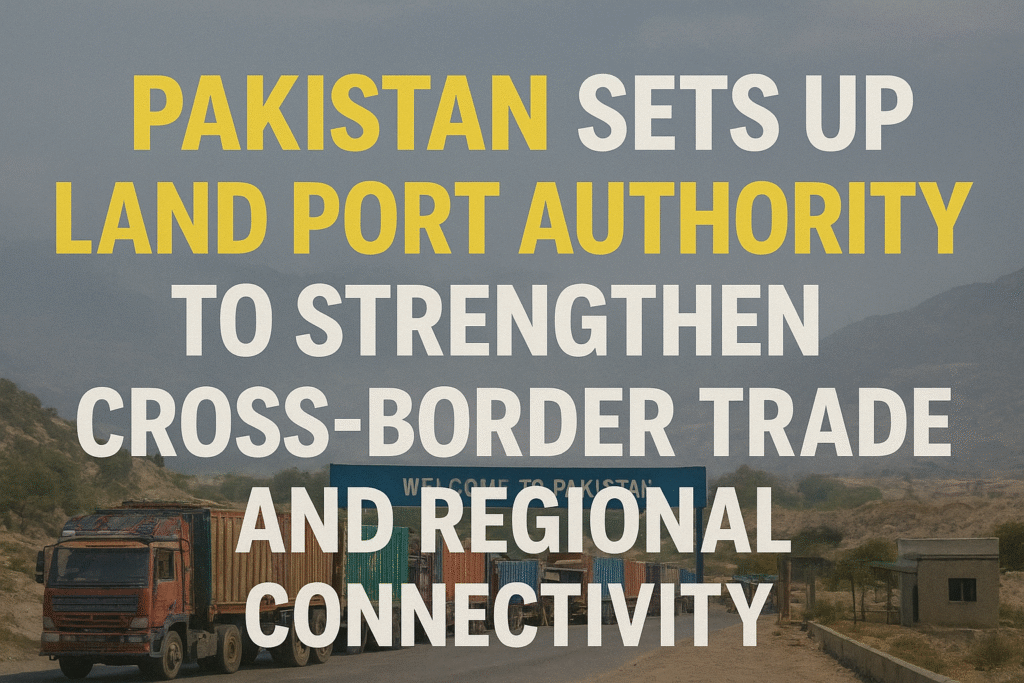
President Asif Ali Zardari has officially signed a bill establishing the Pakistan Land Port Authority (PLPA), a move aimed at transforming cross-border trade and improving regional connectivity. This new statutory body will oversee and modernize land ports, streamline border management, and ensure smoother movement of goods and people across Pakistan’s key trade routes. For Pakistani businesses, especially those operating near borders with Afghanistan, Iran, China, and India, this development is being seen as a potential game-changer.
Experts believe the establishment of the PLPA will not only reduce delays at border crossings but also strengthen Pakistan’s role in regional trade under initiatives like the China-Pakistan Economic Corridor (CPEC) and the broader Belt and Road Initiative (BRI). By digitizing customs processes, improving logistics, and coordinating with neighboring countries, Pakistan is expected to enhance trade efficiency and attract foreign investment. This authority could also help minimize smuggling and unofficial trade, boosting government revenue while benefiting local industries and exporters.
Looking ahead, the Land Port Authority could reshape Pakistan’s economic landscape by positioning the country as a key transit hub in South Asia and Central Asia. With climate change, global supply chain disruptions, and shifting trade patterns, efficient land border management will be critical for economic growth. If properly implemented, this initiative could generate new jobs, strengthen regional ties, and unlock economic opportunities for millions of Pakistanis, making it a milestone for the country’s future prosperity.
