
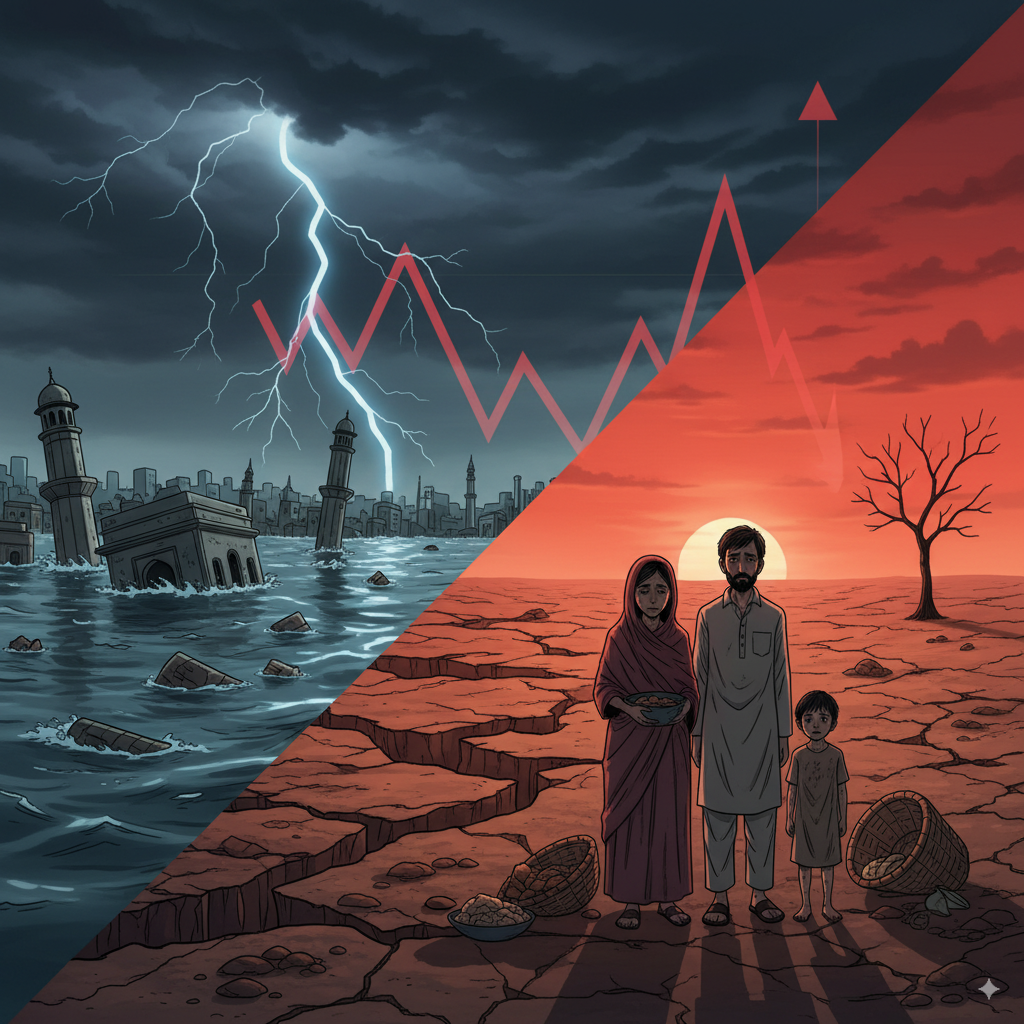
From Floods to Food Shortages: Is Pakistan Heading Towards an Economic Crisis in 2025?
Pakistan is once again facing the devastating consequences of extreme weather, as widespread floods threaten to turn into a looming food crisis. The heavy monsoon rains of 2025 have already displaced thousands, damaged agricultural land, and disrupted supply chains across Punjab, Sindh, and Khyber Pakhtunkhwa. Experts warn that if urgent measures are not taken, these floods could trigger a chain reaction—leading from food shortages to a larger economic crisis.
Agriculture, which forms the backbone of Pakistan’s economy, has been hit hardest. Crops of wheat, rice, and sugarcane have been destroyed in major farming regions, reducing yield expectations for the year. This decline not only risks creating scarcity in local markets but could also force Pakistan to increase food imports, putting additional pressure on foreign exchange reserves.
Meanwhile, rural communities are experiencing a dual crisis—loss of homes and livelihoods. Rising food prices have already started affecting urban centers, with basic staples becoming more expensive. Economists fear that inflation, already at troubling levels, could worsen if relief and recovery operations are not managed efficiently.
Climate change has amplified the intensity of floods in recent years, and Pakistan remains among the top countries most vulnerable to its impact. Experts stress the need for long-term planning, investment in disaster management, and modernized farming techniques to protect both people and the economy.
For now, the question remains: can Pakistan turn this disaster into an opportunity to reform, or will 2025 be remembered as the year floods turned into famine?
