
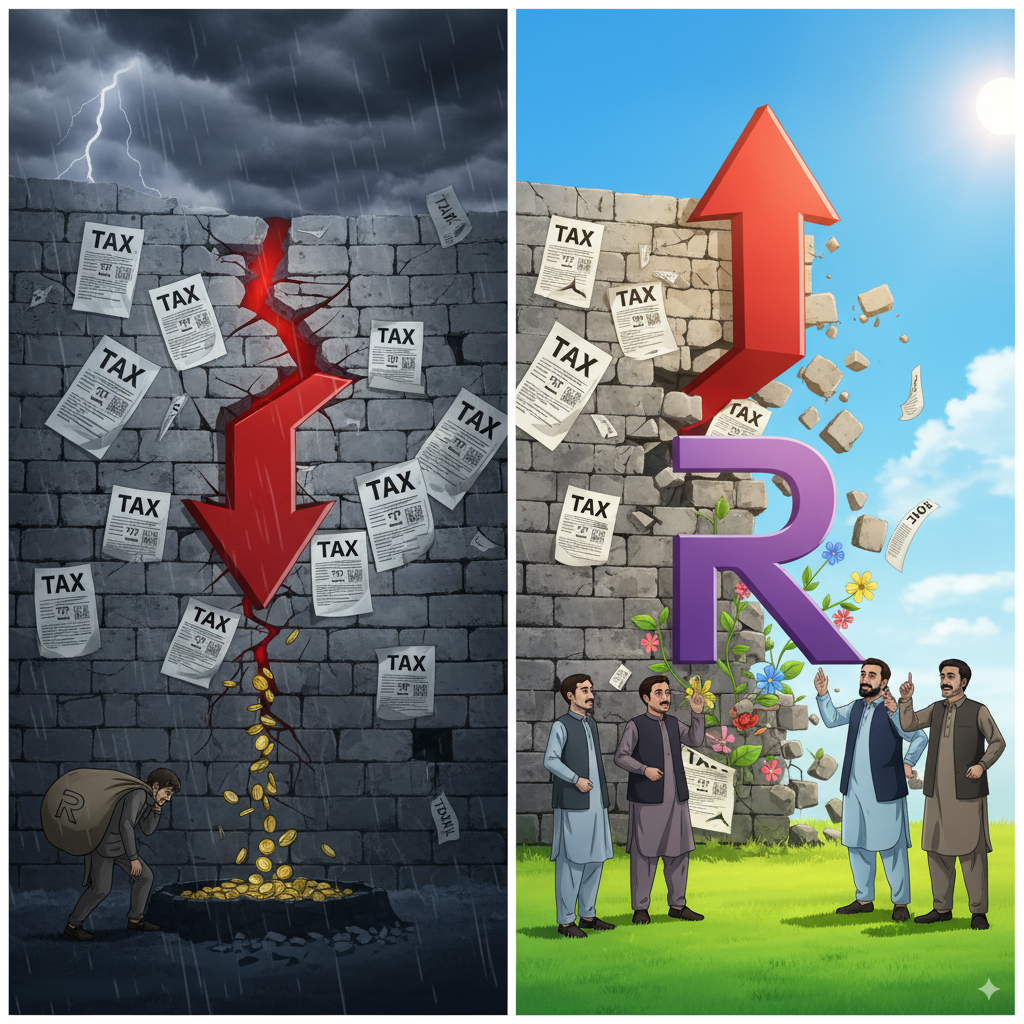
Why High Taxes Fail: Experts Urge Pakistan to Reduce Tax Burden for Economic Growth
As Pakistan struggles with economic uncertainty, one debate continues to dominate the business and political landscape—are high taxes really helping the economy? Experts, economists, and business leaders argue that Pakistan’s current tax system is not only burdensome but also counterproductive. Instead of boosting government revenue, excessive taxation is driving businesses into the informal sector, discouraging investment, and creating frustration among the middle class.
Pakistan already has one of the lowest tax-to-GDP ratios in the region, yet ordinary citizens and registered businesses often feel overburdened. High sales tax, income tax, and additional surcharges on essential goods have made it difficult for industries to grow and for people to manage daily expenses. According to business associations, reducing tax rates and broadening the tax base could actually increase overall revenue by encouraging compliance and bringing more people into the tax net.
Many also believe that Pakistan should shift its focus from taxing consumption to improving direct taxation policies. Small and medium enterprises (SMEs), which form the backbone of the economy, are especially hit hard by complicated tax structures and lack of incentives.
A fairer, simplified tax policy could not only improve revenue collection but also rebuild public trust. Analysts stress that if Pakistan wants sustainable economic growth, it must prioritize business-friendly reforms, reduce unnecessary taxes, and create an environment where entrepreneurship and investment can flourish.
